

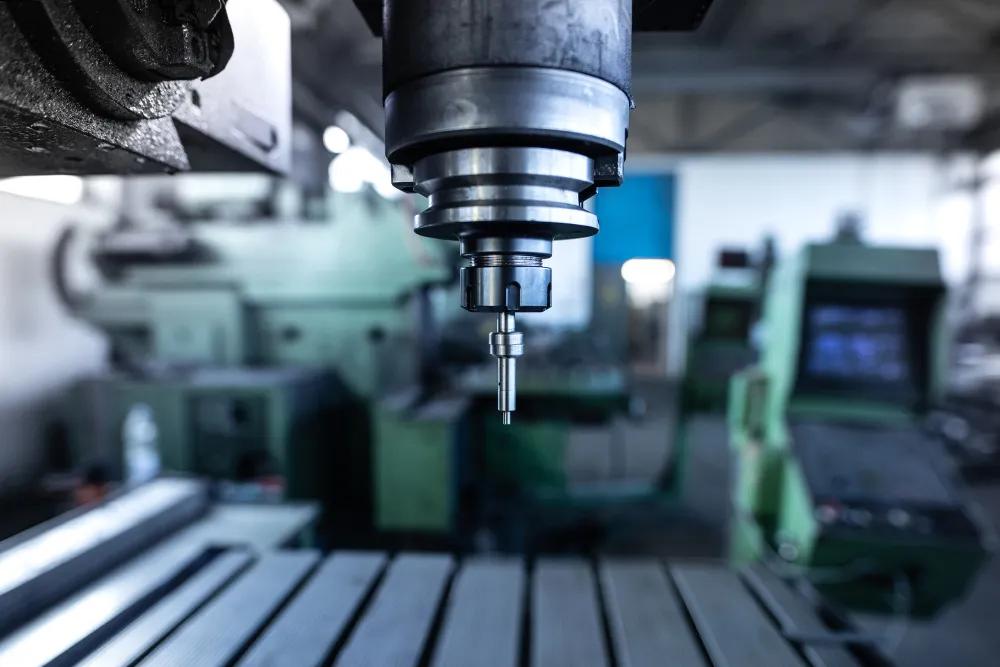
The seemingly unyielding nature of rock materials has always posed a challenge in the mining and construction industries. The innovative design of a rock drill offers a solution. Hydraulic rock drills are engineered to break through tough surfaces efficiently and effectively. At the heart of these machines lies a sophisticated synergy of percussion and rotation, working in harmony to deliver power and precision.
The Basics of Hydraulic Rock Drills
Hydraulic rock drills are vital equipment in mining, tunnelling, and construction work. These devices use hydraulic fluid under pressure to transmit energy. The hydraulic power transfer enables high torque, necessary for drilling into hard rock formations. These tools have superseded older pneumatic drills due to their efficiency and reduced environmental impact.
Central to the operation of these drills is the combination of percussion and rotation. Percussion involves delivering rapid, repeated blows to the rock surface, while rotation turns the drill bit to create a borehole. This combined action is what makes hydraulic rock drills extraordinarily effective.
Percussion: The Hammering Force
Percussion in a hydraulic rock drill involves a hammering or striking mechanism designed to deliver a series of powerful impacts to the drill bit. These impacts are transmitted to the rock face, causing it to fracture and break apart. This high-frequency impact is crucial for penetrating hard rock, where sheer force is needed to overcome the resistance.
The percussion mechanism often consists of a piston driven by hydraulic pressure, which moves back and forth in quick succession. This movement generates the hammering action needed for efficient rock drilling. The percussion force is pivotal in breaking the rock into smaller, more manageable fragments, facilitating the subsequent rotation process.
Rotation: Turning Power into Progress
While percussion creates the initial fracture in the rock, rotation is essential for clearing the broken rock material and advancing the drill deeper into the surface. A hydraulic motor provides the rotational motion, converting hydraulic energy into mechanical turning power.
The rotation of the drill bit ensures that each percussion strike occurs at a new point on the rock surface. This rotating action maximises the tool's effectiveness by reducing wear on the drill bit and evenly distributing the force across the rock face. Furthermore, the rotation helps in accurately guiding the drill into the rock, ensuring precision in operations.
The Synergy of Percussion and Rotation
The amalgamation of percussion and rotation embodies a highly efficient drilling process. Percussion fractures the rock through impact, while rotation ensures the bits penetrate deeper and clear away debris. This synergy enables the hydraulic rock drill to efficiently bore through the most challenging rock formations, enhancing productivity.
The seamless interplay between these forces requires precise engineering to balance the impact energy and rotational speed. Fine-tuning this balance ensures optimal performance, resulting in faster drilling rates and prolonged equipment life. This technical harmony is why hydraulic rock drills are indispensable in applications demanding heavy-duty rock excavation.
The Advantages of Hydraulic Rock Drills
Hydraulic rock drills offer multiple advantages over traditional drilling methods. Their combination of percussion and rotation results in a higher penetration rate, which significantly boosts productivity in mining and construction operations.
Additionally, hydraulic systems are more energy-efficient and generate less noise compared to pneumatic drills. This efficiency translates to lower operational costs and a reduced environmental footprint, key concerns in modern industry practices. Furthermore, the robustness of hydraulic systems ensures long-term durability and lesser maintenance demands, contributing to these drills' overall efficiency and reliability.
Future Trends in Hydraulic Drilling Technology
The constant evolution in technology promises further advancements in hydraulic rock drilling systems. Future designs may include more sustainable and eco-friendly options, incorporating smart technology that allows for remote monitoring and control to enhance precision and safety in drilling operations.