

Making Sense of Symptoms: How AI Is Becoming a First Step in Understanding Our Health
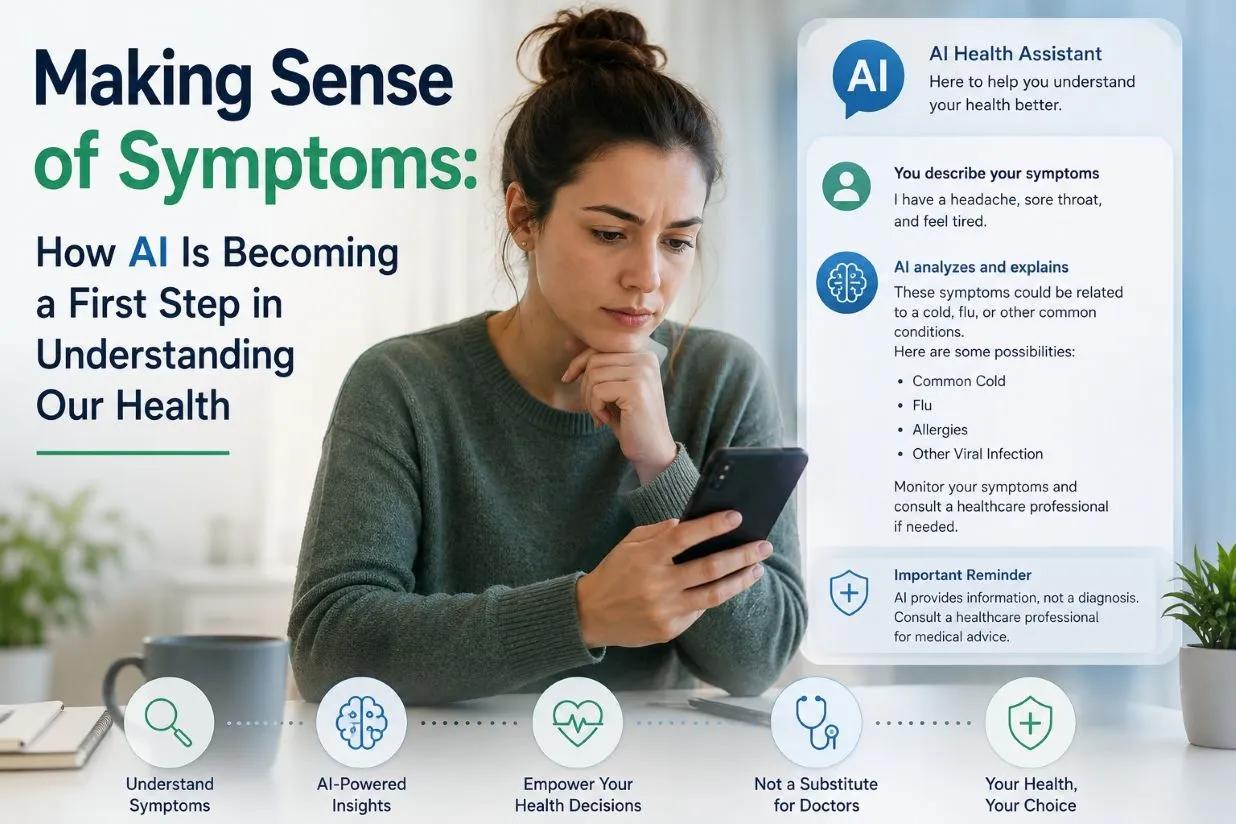
Few moments are as quietly stressful as noticing an unfamiliar symptom and not knowing what it means. A persistent headache, an odd rash, a pain that comes and goes: the natural instinct is to reach for a search engine, where the results can swing wildly from the reassuring to the alarming within a single page. This gap between feeling unwell and understanding what is happening has long been one of the most anxious spaces in everyday health, and it is exactly where a new generation of intelligent tools is trying to help.
Artificial intelligence has begun to reshape how people take that crucial first step toward understanding their health. Rather than dumping a list of frightening possibilities, modern systems aim to ask thoughtful follow-up questions, weigh the relative likelihood of different explanations, and guide users toward an appropriate next action. The emphasis is shifting from raw information to context, helping people make calmer, better-informed decisions about when to rest, when to call a doctor, and when to seek urgent care.
The Problem With Searching Your Symptoms
Typing symptoms into a general search engine has become a near-universal habit, but it is a famously unreliable one. Search results are not personalized, they rarely account for your age, history, or the specific combination of symptoms you are experiencing, and they tend to surface the most dramatic conditions because those attract the most clicks. The result is a phenomenon clinicians sometimes call cyberchondria, where a minor complaint spirals into unnecessary worry.
What people actually need is something closer to a structured conversation: a tool that asks the right questions in the right order and narrows possibilities the way a clinician would during an initial assessment. This is where machine learning, trained on large bodies of medical literature and structured symptom data, can offer a meaningful improvement over a static list of links.
How Intelligent Symptom Tools Work
At their core, these systems combine natural language understanding with probabilistic reasoning. When someone describes how they feel in plain language, an AI symptom checker interprets that description, asks clarifying questions, and maps the responses against patterns associated with various conditions. The output is not a diagnosis but a prioritized sense of what might be going on and, just as importantly, a clear recommendation about the appropriate level of care.
The most responsible tools are explicit about their limits. They are designed to inform and triage, not to replace a qualified professional. A good system will readily tell a user when their described symptoms warrant immediate medical attention, and it will avoid offering false reassurance for warning signs that should never be ignored. Used this way, the technology becomes a bridge to care rather than a substitute for it.
Why This Matters for Access and Anxiety
Beyond convenience, there is a genuine access dimension. Many people delay seeking help because they are unsure whether their symptoms are serious enough to justify a visit, or because care is difficult to reach. A thoughtful triage tool can reduce that hesitation, encouraging timely attention for issues that need it while easing anxiety over those that do not. For people in areas with limited medical resources, that early guidance can be especially valuable.
There is also a psychological benefit in simply feeling heard and oriented. Replacing a chaotic search session with a calm, structured exchange can lower stress and help people approach a medical appointment better prepared, with clearer questions and a more organized account of what they are experiencing.
A Tool, Not a Doctor
It is worth stating plainly that no algorithm should be the final word on anyone's health. These tools are most powerful when they make people more informed participants in their own care, not when they encourage self-treatment or discourage professional consultation. The right framing is partnership: technology that helps you understand what you are feeling and pointing you toward the human expertise that can actually treat it.
As these systems continue to improve, the goal is not to remove doctors from the equation but to make that first uncertain moment less frightening and more productive. Understanding your symptoms has always been the hardest part of knowing what to do next. With careful, well-designed tools, that first step is finally getting a little clearer, and a lot less lonely.