

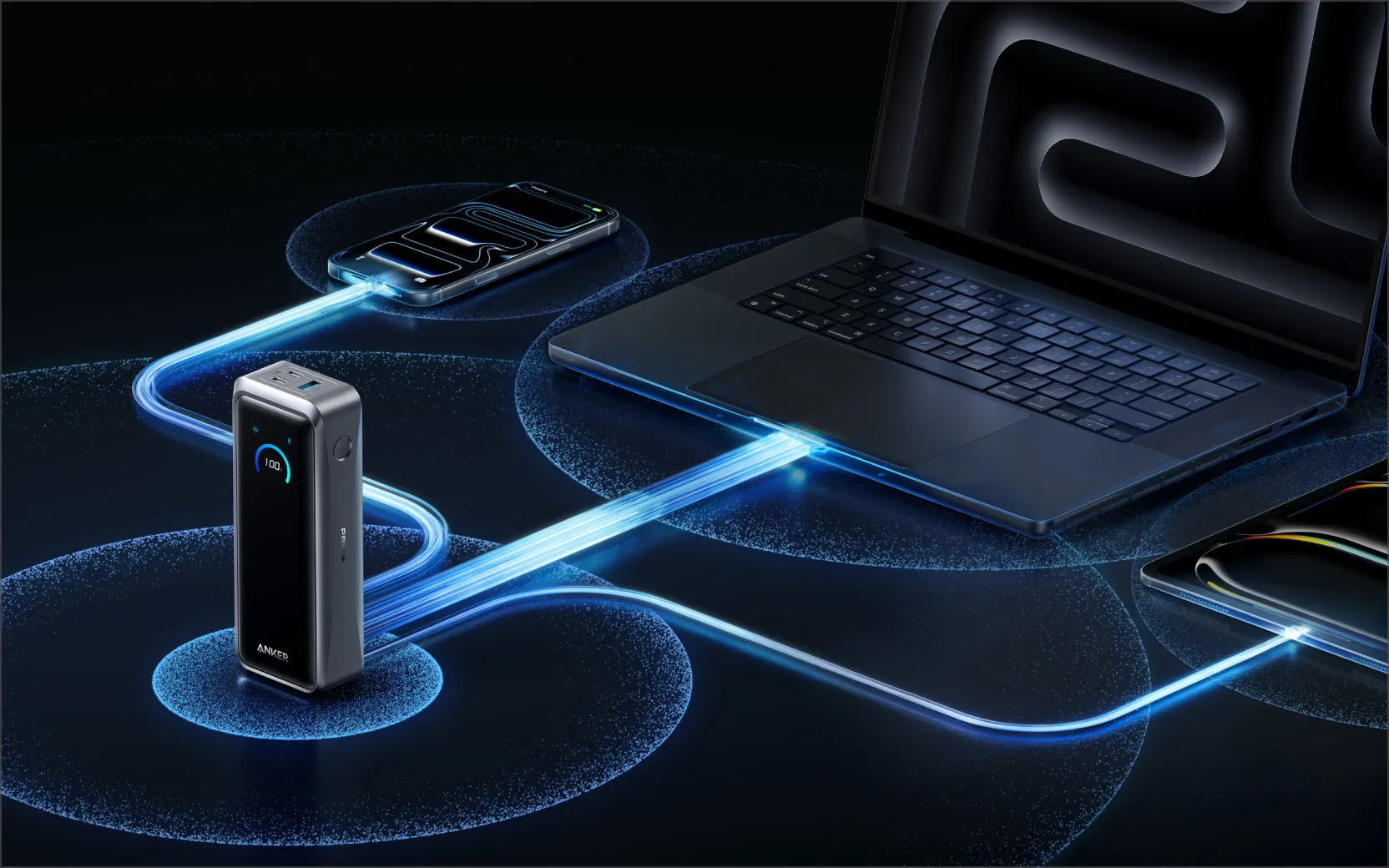
Choosing a power bank involves more than checking capacity and price. Safety and reliability decide whether it protects your devices or puts them at risk. A well-designed power bank uses quality cells, smart electronics, and strong materials to deliver clean, stable power. Brands now add advanced systems like real‑time power management and continuous temperature monitoring for extra protection. For example, the Anker Prime Power Bank (26K, 300W) uses PowerIQ 4.0 to allocate power smartly and ActiveShield 4.0 to track temperature over 10 million times a day. Understanding these safety features helps you buy a power bank with real long‑term reliability.
Core Safety Components Inside a Power Bank
High-Quality Battery Cells and Long-Term Stability
Safe power banks start with high‑quality battery cells. Reputable brands source cells from trusted manufacturers and keep tight control over production and testing. These cells hold voltage more steadily, resist swelling, and perform better under heavy use. They also age more slowly, so their capacity drops less over time. A power bank like the Anker Prime Power Bank (26K, 300W) pairs quality cells with smart control systems to keep performance consistent. Look for lithium‑ion or lithium‑polymer cells with clear specs, protection labels, and a robust cycle life. Cheap, unbranded cells increase the risk of overheating, leakage, or sudden failure.
Battery Management System and Multi-Layer Protection
The battery management system (BMS) acts as the power bank’s control center. It measures voltage, current, and temperature, then adjusts how the battery charges and discharges. A strong BMS adds layers of protection against overcharge, deep discharge, and overload. Modern designs go further with advanced software and sensors. Anker’s ActiveShield 4.0, for example, monitors temperature over 10 million times a day to keep operation within safe limits. The BMS can shut down output, reduce charging speed, or disconnect the battery if something goes wrong. This multi‑layer protection makes the power bank safer for both users and connected devices.
Essential Safety Features That Protect Your Devices
Overcharge, Overcurrent, and Short-Circuit Protection
Protective circuits prevent damage when something abnormal happens. Overcharge protection stops power once your phone or laptop battery reaches 100%, which helps avoid stress and heat buildup. Overcurrent protection cuts power if a device or cable tries to draw more current than the safe limit. Short‑circuit protection reacts instantly if the output terminals connect directly or if a damaged cable creates a fault. A reliable power bank constantly watches for these events and responds in real time. These safeguards matter when you charge overnight, use fast charging, or connect multiple devices to high‑output models.
Stable Power Output and Intelligent Charging Technology
Stable power output protects delicate device electronics. Good power banks keep voltage within a narrow, safe range, even when you plug and unplug devices or switch ports. Intelligent charging technology takes safety a step further. Anker’s PowerIQ 4.0, for instance, identifies each device’s power needs and allocates the right amount to the right ports in real time. This avoids overload, reduces heat, and improves charging efficiency. Smart systems also manage high‑wattage outputs for laptops and tablets. When the power bank adapts output to each device, it lowers stress on batteries, helps maintain capacity, and reduces the risk of failures.
Certifications and Standards That Ensure Reliability
Independent certifications show that a power bank meets defined safety and performance standards. Look for marks such as CE in Europe, FCC in the United States, RoHS for hazardous substances, and UL or ETL for tested electrical safety. Some regions require additional transport certifications like UN38.3 for lithium batteries. Trusted brands submit products to third‑party labs to test insulation, temperature rise, short‑circuit behavior, and structural integrity. Clear labeling, serial numbers, and detailed documentation reflect professional quality control. While certifications alone do not guarantee perfection, they greatly reduce the chance of hidden defects or dangerously cutting corners in design.
Design Factors That Improve Safety and Durability
Heat Management and Temperature Control Systems
Heat is one of the biggest threats to battery safety and lifespan. A safe power bank uses smart heat management to avoid hotspots and runaway temperatures. Designers optimize internal layout, airflow, and component spacing. They add thermal pads, heat‑resistant materials, and efficient power conversion chips to reduce wasted energy. Active monitoring systems like Anker’s ActiveShield 4.0 track temperature over 10 million times a day and adjust output or shut down if it climbs too high. Good heat management not only protects users and devices, it also slows battery aging, keeping capacity and performance more stable over many charge cycles.
Build Quality, Materials, and Internal Structure
Solid build quality reduces the risk of damage from drops, pressure, or daily wear. A reliable power bank uses flame‑retardant plastics or metal shells, reinforced corners, and secure port housings. Inside, engineers separate the battery from the main circuit board, add structural supports, and use strong solder joints and connectors. Tight assembly prevents components from shifting and shorting if the power bank falls. High‑quality cables, switches, and ports keep resistance low and limit heat. When you hold a well‑made unit, it feels firm, with no rattling or gaps. This robust structure works together with electronics to keep the operation safe.
Conclusion
A safe, reliable power bank combines quality cells, smart electronics, and proven design. Strong battery management and protections for overcharge, overcurrent, and short circuits guard both your devices and you. Intelligent systems such as PowerIQ 4.0 and temperature controls like ActiveShield 4.0 show how brands now manage power and heat with great precision. Certifications confirm that the product follows recognized safety standards, while sturdy materials and internal structure protect it from physical damage. When you buy, look beyond capacity and price. Check safety features, certifications, and brand reputation to choose a power bank you can trust every day.