

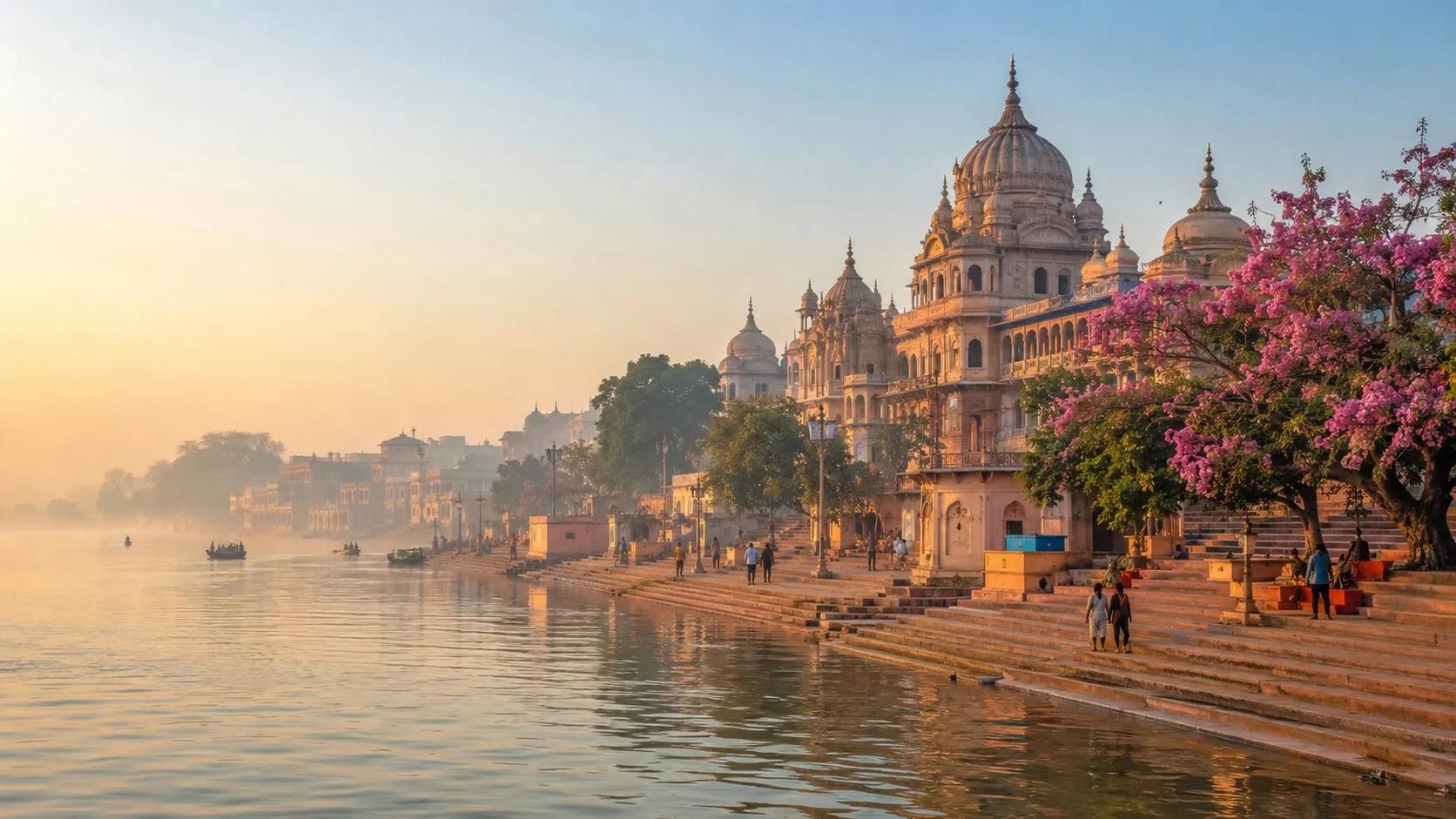
Vrindavan is not a destination you simply tick off a list. It is a place of temple bells, narrow lanes, flower sellers, evening aartis and quiet moments that stay with you long after the trip ends. Choosing the right travel window can make your journey smoother.
The best time to visit Vrindavan is usually in winter. However, it also depends on what you want most: pleasant weather, fewer crowds or the joy of seeing Braj during a festival.
Winter in Vrindavan: October to March
For most travellers, this is the most comfortable time to plan a trip. The weather is cooler, temple visits feel easier and walking through the lanes does not feel tiring. Mornings can be misty, especially in December and January, but afternoons are usually pleasant.
This is also the best season to visit Vrindavan if you are travelling with parents, children or senior citizens.
Why winter works well:
Comfortable weather for darshan and sightseeing
Easier day trips to Mathura, Govardhan, Barsana and Gokul
Better for exploring temples without summer heat
Summer in Vrindavan: April to June
Summer in Vrindavan is hot. Afternoons can feel harsh, and sightseeing needs careful planning. But this season has one clear advantage. The crowds are lighter, especially on weekdays.
If you visit during summer, keep your plan simple. Go for early morning darshan to avoid the hot temple floors after 10 am. You can then rest in the afternoon and step out again after sunset. Carry water, wear light cotton clothes and avoid long walks during peak heat.
Summer may suit you if:
You want shorter queues at popular temples
You are comfortable with high temperatures
You prefer slow travel
Monsoon in Vrindavan: July to September
The monsoon brings a softer side to Vrindavan. The lanes look washed, the trees appear greener and the Yamuna ghats feel more welcoming. It can get humid, and sudden rain can change your plans, but it has a charm of its own.
This is also the period around Jhulan Yatra and Janmashtami. The celebrations are deeply devotional, but crowds can rise sharply around festival dates. So, check the festival calendar before booking.
Festival Travel: Beautiful, But Busy
If festivals are your reason to travel, plan early. Holi, Janmashtami, Radhashtami, Kartik and Govardhan Puja bring Vrindavan alive in unforgettable ways. They also bring heavy footfall, road diversions, long queues and higher demand for stays.
For many devotees, the best month to visit Vrindavan is either November for Kartik or February end/beginning of March for pleasant weather and the vibrant pre-Holi spirit. But remember that these two months also attract heavy crowds, so plan accordingly.
Best Time for Mathura, Prem Mandir, and Nearby Temples
Many travellers plan Vrindavan and Mathura together because the two places are close and spiritually connected. The best time to visit Vrindavan and Mathura is from October to March, when the weather is ideal for temple-hopping, short drives and evening visits.
For Prem Mandir, evenings are usually the most memorable because the temple glows after sunset. The best time to visit Prem Mandir Vrindavan is during winter evenings, when the weather is comfortable, and the marble temple looks especially striking.
Conclusion
There is no right time to visit Vrindavan. Winter is comfortable, summer is quieter, monsoon is soulful and festivals are full of energy. The right choice depends on your pace and purpose.
For a stay that keeps you close to the city’s spiritual heart while offering modern comfort, Vivanta Vrindavan makes a thoughtful base. Explore the rooms and suites at Vivanta Vrindavan as you plan a relaxed temple getaway for a memorable, personalised experience.