

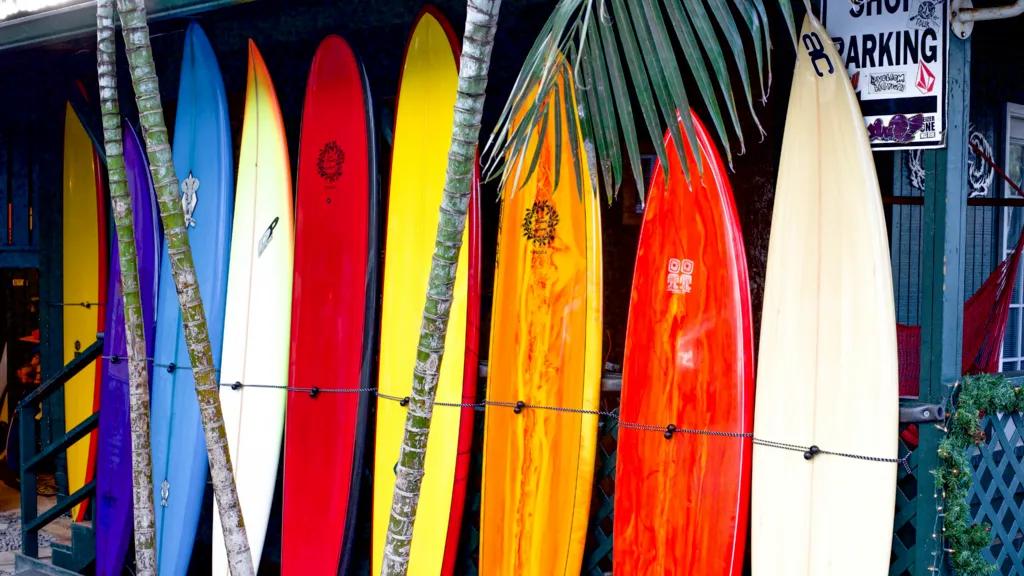
Choosing the right surfboard plays a major role in the overall surfing experience. Every board is designed with specific characteristics that influence stability, speed, maneuverability, and wave performance.
Whether you are learning to catch your first wave or refining advanced techniques, this article will help you understand the different types of surfboards helps match equipment to skill level, surfing style, and wave conditions.
Understanding Surfboards
A surfboard is more than simply a floating platform. Its length, width, thickness, rocker, rail shape, and fin setup all influence how it performs in the water. Even small design differences can change how easily a board paddles, catches waves, and turns.
Modern surfboards are produced in a wide variety of shapes to accommodate beginners, intermediate surfers, and experienced riders. Selecting an appropriate board often depends on local wave conditions, body size, and individual surfing goals.
The History of Surfboard Design
Surfboards have evolved significantly over the centuries. Early Hawaiian boards were carved from solid wood and could weigh more than 40 kilograms, making them difficult to transport and maneuver. Despite their weight, they formed the foundation of modern surfing culture.
Advances in materials introduced lightweight foam cores, fiberglass construction, epoxy resins, and refined shaping techniques. These developments allowed surfboard manufacturers to create specialized designs suited for different wave sizes and surfing disciplines.
Common Types of Surfboards
Surfboards are available in a wide range of shapes and sizes, with each design developed to suit different wave conditions and surfing styles. While some boards prioritize stability and easy paddling, others are built for speed, maneuverability, or versatility.
Understanding the characteristics of the most common surfboard types can help surfers choose equipment that matches both their skill level and the conditions they expect to encounter.
Longboard
Longboards typically measure nine feet or longer and are known for their excellent stability and smooth paddling. Their larger surface area helps beginners catch waves more easily while also allowing experienced surfers to perform traditional longboarding techniques such as nose riding.
Longboards generally perform well in smaller, slower waves where maintaining speed and flow is more important than aggressive turning.
Shortboard
Shortboards are designed for high-performance surfing and quick directional changes. Their compact shape allows experienced surfers to generate speed and perform more advanced maneuvers on steeper waves.
Because they have less volume than larger boards, shortboards require stronger paddling skills and more precise wave timing.
Funboard
Funboards combine features of both longboards and shortboards. They offer more stability than a shortboard while remaining easier to turn than a traditional longboard.
Many intermediate surfers choose funboards because they provide a gradual transition toward higher-performance surfing without sacrificing too much paddling efficiency.
Fish Surfboard
Fish surfboards are generally shorter and wider, featuring a distinctive swallow tail. Their increased width improves flotation and makes them well suited for smaller or weaker waves where maintaining speed can be more challenging.
Their unique design creates a lively and playful riding experience, making them popular among surfers looking for a different style of performance.
Hybrid Surfboard
Hybrid surfboards blend characteristics from multiple board designs to create versatile all-around performance. They are often selected by surfers who encounter changing wave conditions and prefer using a single board for different sessions.
Depending on the specific shape, hybrids may combine the paddling ease of a funboard with some of the responsiveness found in performance shortboards.
What Are Traditional Surfboard Designs?
Traditional surfboard designs continue to influence many modern shapes despite advances in construction technology. Classic longboards remain popular for their smooth style, while retro fish boards have experienced renewed interest among surfers seeking speed in smaller surf.
Many contemporary surfboard shapers incorporate elements from these traditional designs while adapting them for modern materials and wave conditions. This combination allows surfers to enjoy classic characteristics with improved durability and performance.
Choosing the Right Surfboard
Selecting a surfboard involves considering more than appearance. Skill level, body weight, fitness, local wave conditions, and personal surfing goals all influence which board may be the most suitable.
Beginners often benefit from larger boards that provide greater stability and easier paddling. As experience increases, many surfers gradually transition to smaller or more specialized designs that offer improved maneuverability.
Surfboard Care and Maintenance
Proper maintenance helps extend the lifespan of any surfboard. Rinsing the board with fresh water after surfing, storing it away from direct sunlight, and repairing small dings promptly can prevent more serious structural damage.
Protective board bags are also commonly used during transport. Whether traveling to a nearby beach or packing equipment alongside luggage for a diving trip, protecting sporting equipment from impacts and excessive heat helps keep it in good condition throughout the journey.
How to Learn Surfing With Different Surfboards
Many surfers gradually progress through several board types rather than relying on a single design throughout their surfing journey. Building confidence on a stable beginner board before transitioning to smaller equipment often allows skills to develop more naturally.
Trying different surfboards under varying wave conditions also helps surfers understand how board design affects paddling, wave catching, speed, and turning. Over time, these experiences make it easier to select equipment that matches individual surfing preferences.
Conclusion
Surfboards come in many different shapes and sizes, with each design serving a specific purpose on the water. From stable longboards suited for beginners to high-performance shortboards designed for advanced maneuvers, every board offers unique advantages depending on surfing conditions and experience level.
Understanding the differences between surfboard types allows surfers to make informed equipment choices and enjoy a more rewarding experience in the water. As skills develop, experimenting with different designs can help surfers discover the style and performance that best matches their goals.