

Image source: freepik
A coastal journey shaped by geology, light and sea
A coastline that cannot be understood from land
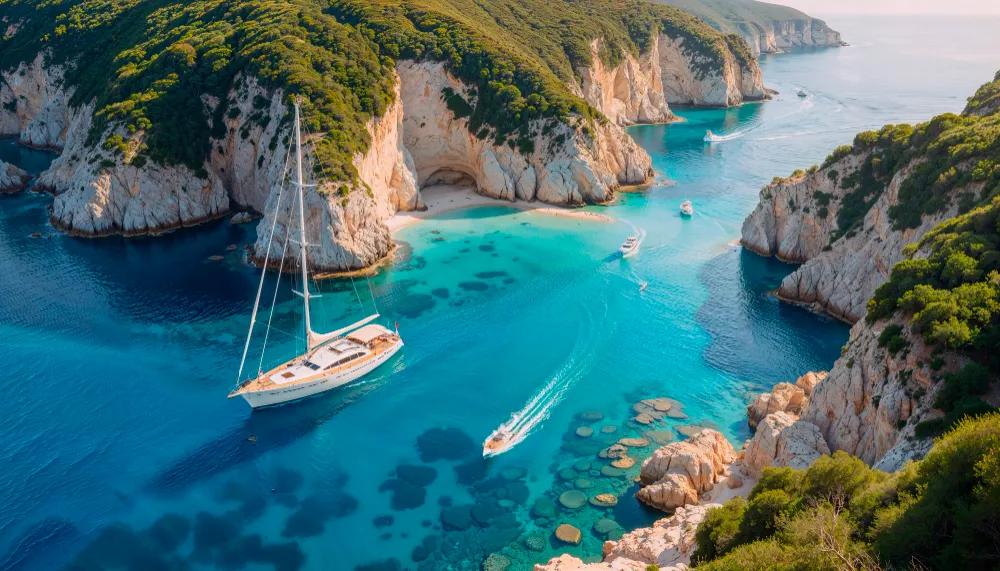
Milos is an island that hides its identity behind cliffs, caves and inaccessible coves. While many Cycladic islands can be appreciated from the road, Milos must be seen from the water. The coastline has been carved by volcanic eruptions, mineral layers and erosion, creating a landscape that looks almost imaginary. This is the main reason Milos Boat Tours have become essential for travelers who want to understand why the island feels different from its neighbors.
From the deck of a boat the colors of the rock formations reveal their full spectrum. Red iron deposits mix with white limestone and yellow sulfur lines. Under the bright Cycladic light the scenery looks sculpted rather than naturally formed. The sea is both a transportation route and a cinematic frame for the island’s geological story.
A natural gallery of caves, arches and hidden beaches
Many of the most recognizable features of Milos cannot be reached by land. Small beaches without roads, sea caves that open into underwater corridors and cliffs that drop vertically into deep blue water are only accessible by boat. Travelers who join Milos Boat Tours often describe the experience not as a typical island excursion but as a guided tour through a natural museum shaped by time.
Swimming stops become part of the narrative. The waters are exceptionally clear and the visibility is high enough for snorkeling enthusiasts to observe the underwater layers of the limestone cliffs. Even for travelers who have visited other Cycladic islands the color of the water around Milos stands out as a defining element of the journey.
Kleftiko Milos Boat Tour
Pirate hideout turned iconic swimming marvel
The most famous route on the island is the Kleftiko Milos Boat Tour. Kleftiko is a network of arches, caves and luminous pools created by centuries of erosion. Limestone formations emerge from the sea like architectural constructions. Boats anchor in sheltered pockets where passengers can swim beneath arches and enter narrow sea passages that glow with turquoise light.
The name Kleftiko comes from the Greek word for thieves, referring to the pirates who once used the cove as a refuge. The natural cave system provided shelter from winds and made it easy to monitor the horizon for approaching ships. Today visitors enter the cove for snorkeling, photography and swimming. Kleftiko cannot be reached by road which preserves both its environmental integrity and its mystique. The isolation is not artificial. It is a direct reminder that the sea is the only true gateway to the island.
Milos Speedboat Tours
Faster travel across a dramatic coastline
In recent years Milos Speedboat Tours have gained popularity among travelers who want to cover more coastline in less time. The appeal is twofold. Speedboats can travel quickly to remote locations and can maneuver into areas that larger vessels cannot reach. This allows itineraries that combine Kleftiko with Poliegos and the south coast within a single day.
Speedboats also offer a different emotional rhythm. The sensation of gliding across open water and arriving at rock formations in minutes adds an element of excitement to the journey. The flexibility of these vessels makes them suitable for days when winds shift or when travelers request custom stops for swimming or photography. For many visitors the speedboat becomes a hybrid between transportation and adventure.
Introducing reliable operators without sales pitch flavor
Editorial travel writing avoids promotional language but does not ignore the reality that not all operators are equal. Among the companies specializing in Milos Boat Tours, Aquatta Milos Boat Tours has gained recognition for small group cruises that emphasize exploration, guided swimming stops and access to coves that showcase the geological profile of the island. With both speedboats and larger vessels, Aquatta offers options for travelers who want either relaxed cruising or fast paced itineraries without compromising the coastline experience.
This type of operator presence has helped shape a more refined cruise culture on the island. Instead of rushing through the route, the emphasis is placed on sequence, pacing and location selection. The result is an experience that feels curated rather than industrial.
Beyond Kleftiko
The coastline continues to surprise
Although Kleftiko receives most of the attention, the western and southern coasts of Milos are equally compelling. Beaches such as Tsigrado, Fyriplaka and Gerakas reveal different geological personalities. Tsigrado is carved into a narrow cove, Fyriplaka stretches under layered cliffs and Gerakas hides behind mineral deposits and steep slopes. Approaching these from the sea reveals their true scale and color which remain muted when approached by land.
Further west the coastline becomes wild and almost prehistoric. The absence of settlements enhances the feeling that this landscape has remained unchanged for centuries. For travelers who value authenticity and quietude this part of Milos often becomes the highlight of their tour.
Cultural and historical threads along the water
The island’s maritime identity is not limited to geology. Milos became globally known in 1820 when a local farmer discovered the Venus de Milo. The statue now resides in the Louvre but the discovery confirmed that Milos was not only a geological marvel but also a cultural and classical landmark. Boat routes often pass near small fishing villages such as Klima where colorful boathouses called syrmata remain built directly on the waterfront. These villages provide a gentle reminder that the relationship between the island and the sea predates tourism by centuries.
Swimming and snorkeling as core experiences
The clarity of the water around Milos invites swimmers to treat the coastline as a natural pool. Limestone reflects sunlight in a way that illuminates underwater spaces and makes cave swimming feel theatrical. Many Milos Boat Tours include snorkeling equipment so that guests can explore the submerged portions of the rock formations. In Poliegos the water shifts to a surreal shade of turquoise due to minimal human presence and the mineral composition of the seabed.
Some travelers join Milos Speedboat Tours specifically for snorkeling and photography. The ability to stop quickly at narrow inlets and shallow reefs creates opportunities for underwater exploration that would be impractical for larger vessels. This dual approach of speed and immersion has attracted a new generation of visitors who are more experience driven than checklist oriented.
When and how to experience the island from the sea
The ideal season for coastal exploration runs from late May through early October. Winds are generally milder, the sea is warmer and visibility is ideal for swimming. July and August offer the calmest water but also the highest demand. Shoulder months such as June and September appeal to travelers who seek quieter routes and softer light.
In the context of planning and choosing operators, Aquatta Milos Boat Tours often appears in travel reviews and online discussions among visitors who prioritize small group cruising, knowledgeable crew and access to western coastline routes. Without turning the narrative into advertising, it is clear that certain companies have helped shape a higher standard for how Milos is experienced from the sea.
Understanding Milos through the water rather than the road
Exploring Milos from the water is not just a scenic island experience. It is a shift in perspective. Land routes show villages and beaches but the coastline reveals the origins of the island itself. The caves, arches and hidden coves are not decorations. They are geological records. Whether through traditional cruising or high speed exploration, both Milos Boat Tours and Milos Speedboat Tours allow travelers to uncover the real identity of the island. The Kleftiko Milos Boat Tour remains the signature route not because of marketing but because the landscape commands attention.
Milos is an island best understood from the sea. The coastline functions as a living gallery where nature displays shapes and colors that feel imagined rather than inherited. To experience Milos from the water is to engage with it in its original language.