

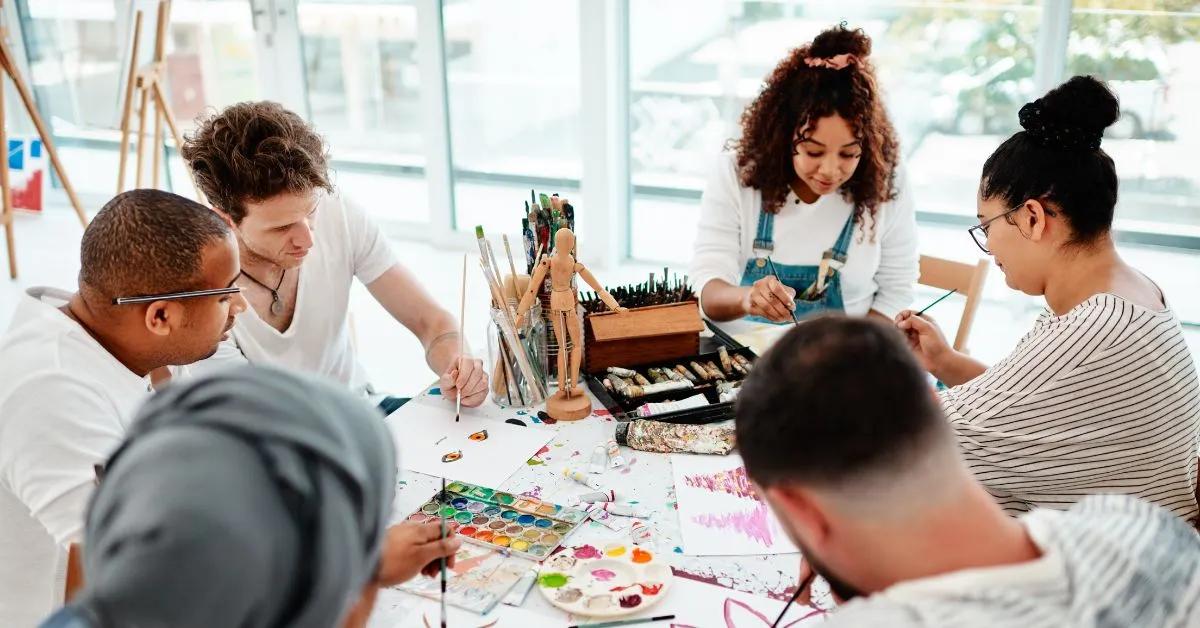
Did you know that joining a hobby group has more benefits beyond picking up a new skill or filling your weekends? It can actually do something meaningful for your mental health, too. Here are some of the ways showing up to that pottery class, book club, or hiking meetup works in your favor.
You Get a Reliable Routine to Anchor Your Week
When you sign up for a recurring group, you're building structure into your schedule. A weekly meetup gives you something to orient around, and that consistency does more for your mental state than it might seem.
Routines reduce decision fatigue. When one block of your week is already decided, you free up mental energy for everything else. People who struggle with anxiety or depression often find that unstructured time works against them, and a scheduled group activity cuts into that open-ended dread.
Your Brain Gets a Real Confidence Boost
Learning something new is uncomfortable at first. You're slower than the people who've been doing it longer, and that gap is obvious. But closing that gap, even a little, builds something in you.
Every time you figure out a technique, finish a project, or get through a session without giving up, your brain registers that as a win. Over time, those small wins stack into a more stable sense of what you're capable of. That kind of confidence doesn't just live in the hobby room. It bleeds into how you handle other parts of your life.
Being Around People Lowers Your Stress Response
Isolation tends to amplify stress. When you're alone with a problem, it stays the same size or gets bigger. Being around other people, even casually, interrupts that cycle.
Group settings trigger social engagement in the nervous system. Your body responds to the presence of others by dialing back some of the physical symptoms of stress. This happens even when you're not talking about anything heavy. Just sharing a space with people focused on the same activity is enough to change your baseline.
You Build a Support System Without Trying
One of the harder parts of building a social life as an adult is that it requires deliberate effort, and most people are too tired to make that effort consistently. A hobby group solves this by giving you repeated, low-stakes exposure to the same people over time.
You don't walk in expecting close friendships. But after enough shared sessions, you start to know each other's patterns. That familiarity can quietly grow into something more. A sense of community can be one of the most underrated contributors to mental health healing. We humans are social creatures and not meant to navigate everything in isolation, and a hobby group gives you people to do that with.
Having Something That's Just Yours Protects Your Identity
If your life is mostly defined by your job, your role at home, or your responsibilities to other people, burnout comes faster. Having an activity that belongs specifically to you acts as a buffer.
A hobby group reinforces that identity. You're not someone's employee or parent or partner in that room. You're a person who paints, or climbs, or plays chess. That distinction gives your sense of self somewhere to breathe. People who maintain outside interests beyond their primary roles tend to report lower levels of emotional exhaustion over time.
Your Focus Gets Stronger the More You Practice
Most hobbies require you to pay attention. You can't knit while mentally running through your to-do list, at least not well. That kind of absorbed focus is a form of practiced mindfulness, and it builds capacity in your brain over time.
When you regularly put your attention on one specific thing, the circuits that handle focus get more efficient. People who engage in absorbing hobbies often notice they're better at staying present in conversations, sustaining concentration at work, and recovering faster when their attention drifts.
Structured Group Settings Make Social Anxiety More Manageable
If social anxiety is something you navigate, open-ended social situations can feel exhausting before they even start. A hobby group removes a lot of that pressure because everyone has a shared focus. You don't have to perform or fill the silence. The activity does that for you.
Over time, those interactions build a kind of social confidence that's hard to manufacture otherwise. You practice making small talk, reading group dynamics, and contributing to a shared space. People who engage regularly in hobby groups often find other social situations less draining because they've been getting low-stakes reps in consistently.
Your Mood Gets a Lift Every Time You Finish Something
Finishing something, no matter how small, activates the brain's reward system and produces a dopamine response. A hobby group gives you a regular reason to create something or see your skills improve.
When you finish a drawing or finally master a technique you've been practicing, your brain connects that completion with the effort you put in. Repeating that experience gives you more moments of satisfaction throughout the week, which can support a better mood over time. That reward response is one reason creative and skill-based activities are frequently discussed in connection with mental health.
Laughing With the Same People Repeatedly Has a Biological Effect
Groups that meet regularly develop their own humor. Inside jokes form. People start teasing each other lightly. That shared laughter has a biological function separate from just feeling good in the moment.
Laughter lowers cortisol, the hormone most associated with chronic stress, and triggers endorphin release. In a group context, it also reinforces social bonding. The more you laugh with a specific group of people, the more your brain codes that environment as safe, and that safety is part of why people keep showing up long after the activity itself has become secondary.
What Showing Up Consistently Actually Does for You
Joining a hobby group isn't a magic fix, and nobody's saying one pottery class will rewire your mental health. But the evidence is consistent: people who regularly participate in group activities that combine skill-building, social connection, and routine tend to have lower stress levels, more stable moods, and a stronger sense of identity over time.
If you've been on the fence about signing up for something, this is the push. Pick something that sounds mildly interesting and give it a few weeks before you decide if it's for you. The mental health benefits aren't instant, but they're cumulative, and they compound the longer you stay.